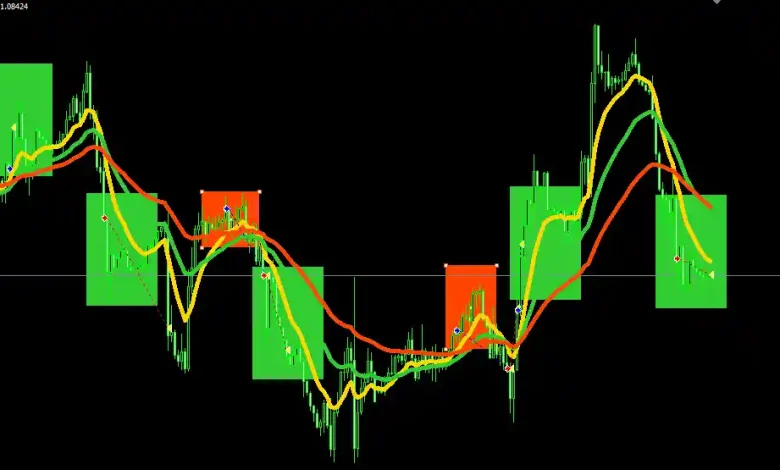
Three EMA Strategy in Forex | Simple, Smart, and Surprisingly Effective

In the noisy world of forex trading, where countless strategies promise the perfect edge, the real game-changer often lies in simplicity. The Three EMA Strategy (10, 25, 50) has gained attention because it strips trading down to its essentials while still delivering powerful results. Traders are drawn to it not only for its straightforward setup but also for the consistency it shows in backtests and real market conditions. In this article, we’ll explore how this strategy works in practice, what the numbers reveal about its performance, and why many consider it an ideal choice for both beginners and seasoned traders looking for clarity in their approach.
Getting Started with the Three Moving Average Strategy
If you’ve ever felt that finding the “perfect” trading strategy has to be complicated, you’re not alone. Many traders jump from one method to another, only to end up more confused than before. The truth is, sometimes the simplest tools can create the clearest signals. That’s where the Three Moving Average Strategy steps in—straightforward, practical, and surprisingly powerful.
Here’s the idea: instead of relying on a single moving average, you combine three with different time frames. Each one represents a different layer of market behavior—short-term, medium-term, and long-term. When these lines cross in a certain way, they send strong clues about potential trend changes. In other words, the market is quietly telling you when it might be time to get in—or step aside.
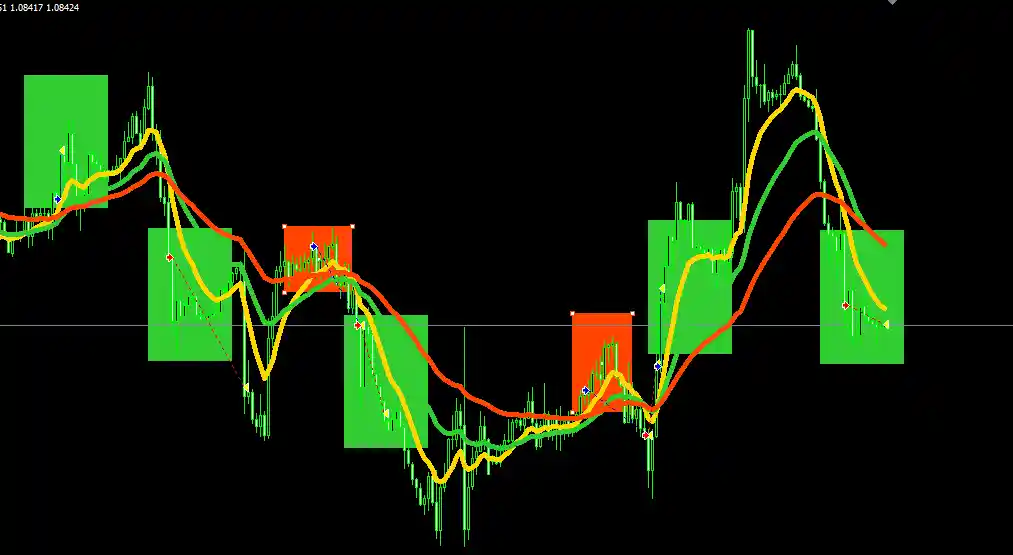
What makes this strategy stand out is its balance. It doesn’t overcomplicate things, yet it helps filter out a lot of the “noise” in price action. With the right setup, traders can spot clearer entry points and aim for steady, more consistent gains. If you’ve seen those colorful moving average lines dancing on your chart but never knew how to really use them, this strategy could be the missing piece that makes them click.
Required Tools for the Three Moving Average Strategy
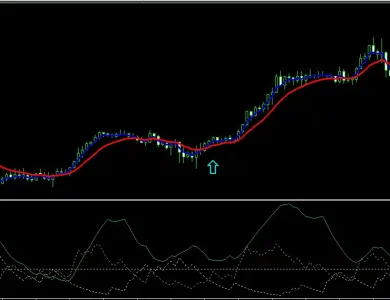
The beauty of the Three Moving Average Strategy is in its simplicity—you don’t need fancy tools or complicated setups to get started. All it takes is adding three exponential moving averages (EMAs) with periods of 10, 25, and 50 to your chart, and you’re good to go. This simple setup creates a clear visual guide that helps you spot unique trading signals without getting lost in market noise. By layering short, medium, and longer-term trends together, you gain a more balanced view of price movement, making it easier to catch potential shifts and trade with more confidence.
How to Trade with the 10, 25, 50 Three Moving Average Strategy?
The beauty of this strategy is that it keeps things simple while still delivering solid results. You don’t need complicated setups or dozens of indicators—the 10, 25, and 50 EMAs are enough. It works well with most charting tools, and what traders love most is that it tends to be accurate and often provides a high win rate without unnecessary complexity.
Choosing the Right Time Frame
The first step is setting your chart to the right time frame. This strategy shines on higher time frames—one hour and above. Shorter time frames are usually too noisy and volatile, making the signals less reliable. By sticking to larger time frames, you filter out unnecessary price fluctuations and focus on the moves that really matter.
Entry Signals
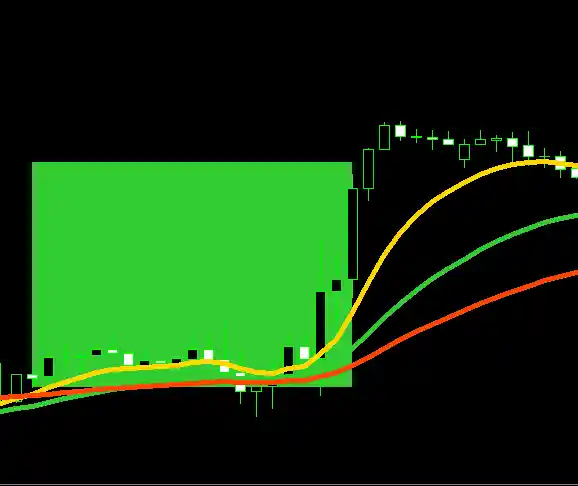
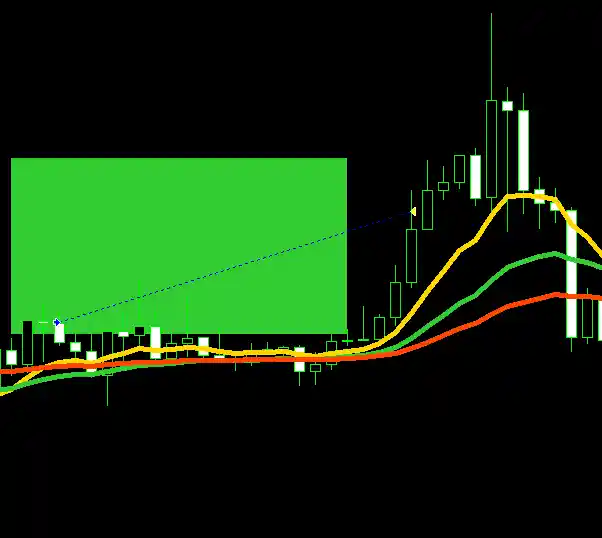
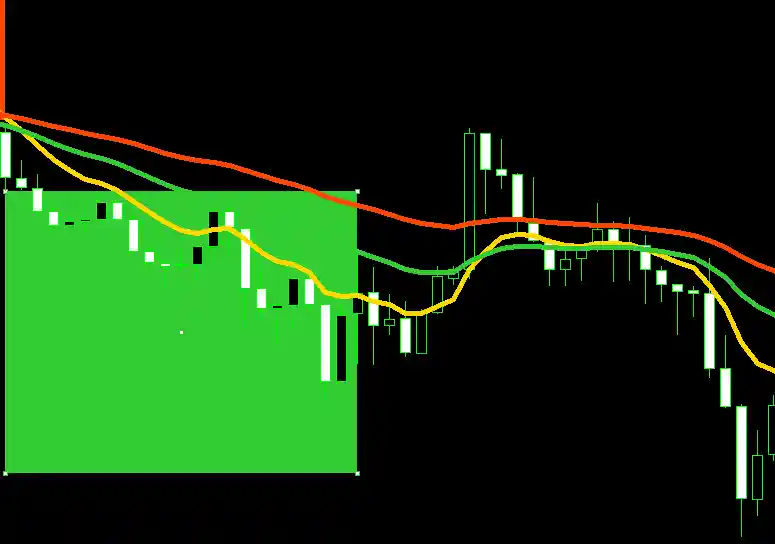
The entry rule couldn’t be easier: watch for the 10 EMA to cross the other two moving averages. If the 10 EMA crosses above both the 25 and 50 EMAs, that’s your green light to go long (buy). On the flip side, if it crosses below them, that’s a clear signal to open a short (sell). These crossovers highlight potential trend shifts and give you a straightforward way to jump in at the right moment.
Setting the Stop Loss
Protecting your trade is just as important as entering it. Place your stop loss just beyond the last candle that sits outside the three EMAs. A smart tip is to position it behind the candle’s shadow (wick) to avoid being stopped out by small price spikes. This helps you stay in trades longer and reduces unnecessary losses.
Setting the Take Profit
When it comes to taking profit, keeping things balanced is key. A simple and effective approach is to set your take profit equal to your stop loss or slightly higher. For example, if your stop loss is $1 away, aim for $1 to $1.2 as your target. This creates a healthy risk-to-reward ratio and ensures you’re not risking more than you stand to gain.
Backtest Results of the Three EMA Forex Strategy
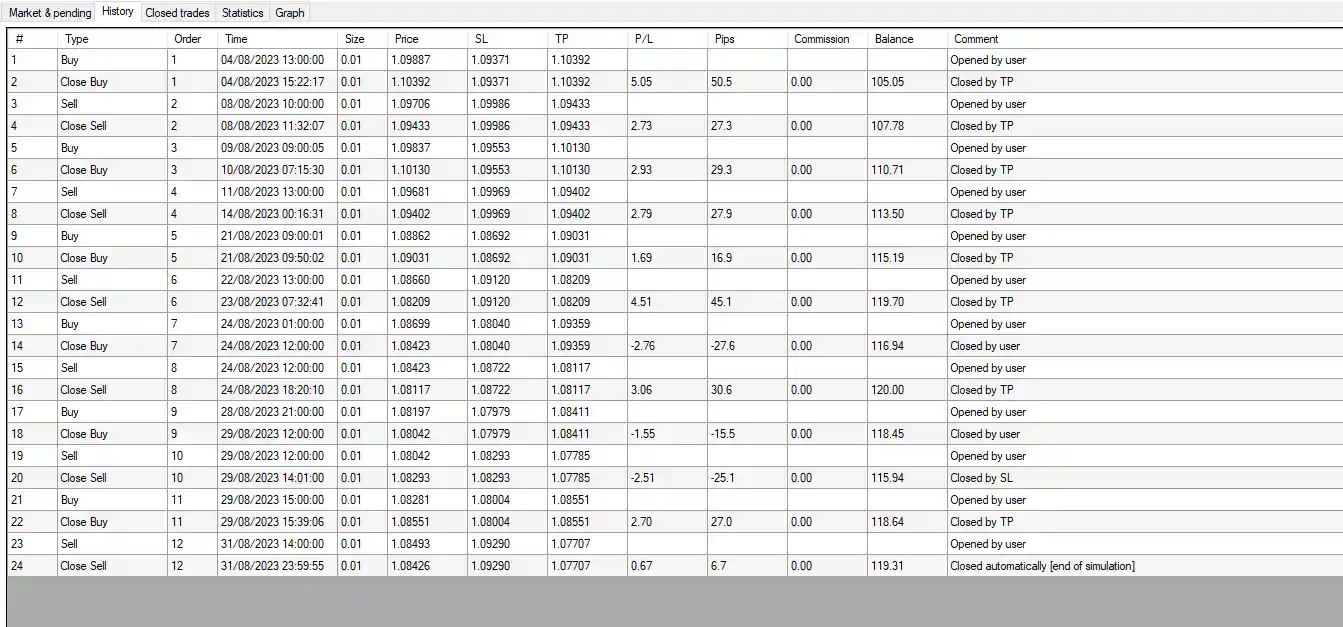
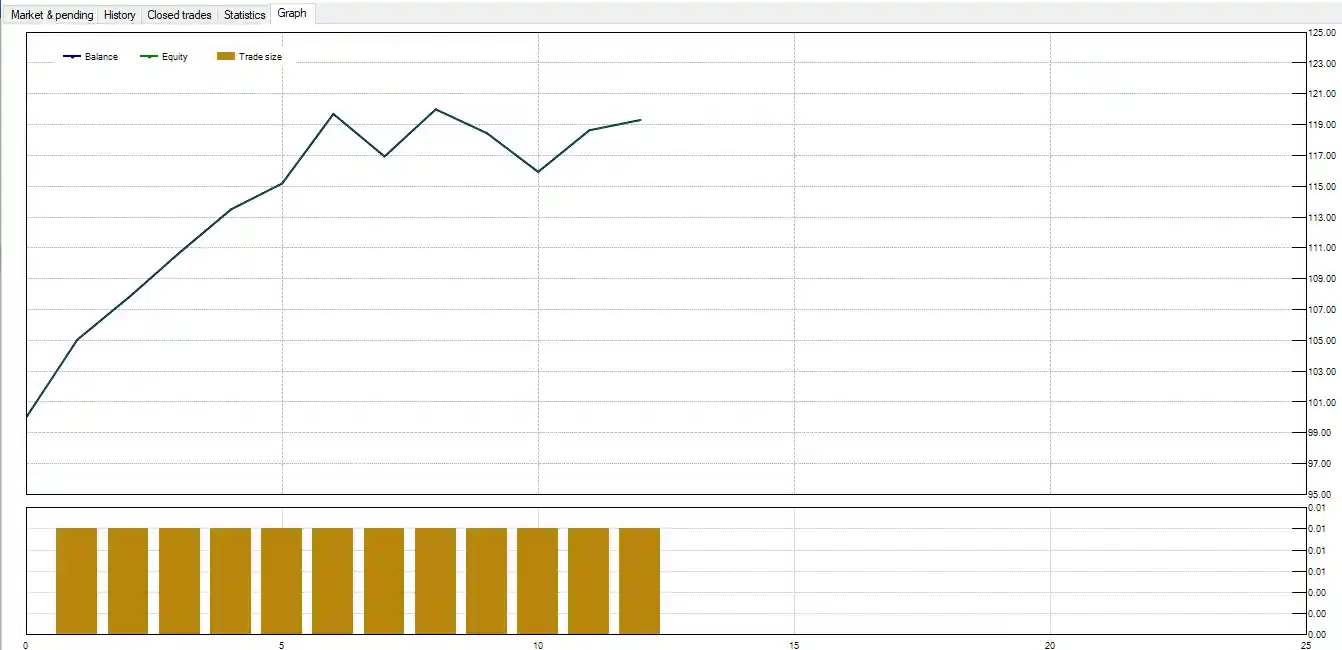
At first, this strategy may look overly simple, and the 1:1 risk-to-reward ratio might seem like a weakness. But the backtest proves otherwise. Thanks to its strong win rate, this issue is balanced out. We tested it on the EUR/USD pair from August 1 to August 31, 2023, and the results were clear and reliable.
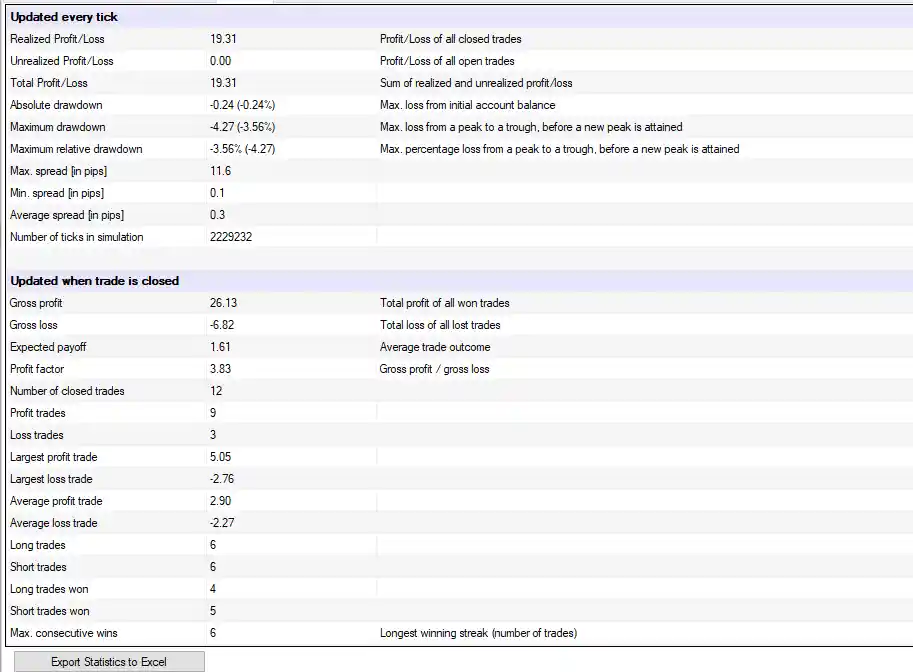
The backtest showed a profit factor of 3.83, which is impressive and highlights its profit potential. Out of 12 trades, 9 were winners and only 3 ended in loss, giving it a solid 75% win rate. Even though the average size of wins and losses was almost the same, the high accuracy makes this strategy stand out as a practical and effective choice for traders.
My Notes on the Three EMA Forex Strategy (10, 25, 50)
I tested this strategy during a period that included both ranging and trending markets. One interesting thing I noticed is that crossovers usually happen only when a trend is clearly established. The wider spacing between the three EMAs prevents crossovers in choppy, sideways conditions—so you don’t get dragged into false trades during ranges. You can also run it with a 1:2 risk-to-reward setup, but keep in mind that profits in the same time frame will be smaller (I tried that as well). Another key point: always exit a trade if a signal appears in the opposite direction. Sometimes the system gives a new signal before your stop loss is even hit—in that case, it’s smarter to close the current position and follow the fresh signal.
From my perspective, this strategy is an excellent choice for beginners. If you pair it with an indicator or a custom bot to alert you of crossovers, you can spot more opportunities and even pass prop firm challenges with it. That said, I strongly recommend practicing thoroughly and running several more backtests before committing real capital. And of course, if you still have questions or doubts, feel free to drop them in the comments—I’ll be happy to help.
FAQ
1. What is the Three EMA Strategy?
It’s a simple forex trading method using three exponential moving averages (10, 25, 50) to identify potential trend changes.
2. On which time frames does it work best?
Higher time frames, like one hour or above, are recommended for more reliable signals.
3. How effective is this strategy?
Backtests show a strong profit factor (3.83) and a 75% win rate, making it surprisingly consistent.
4. Is it suitable for beginners?
Yes, its simplicity, clear signals, and consistent results make it ideal for traders at any experience level.