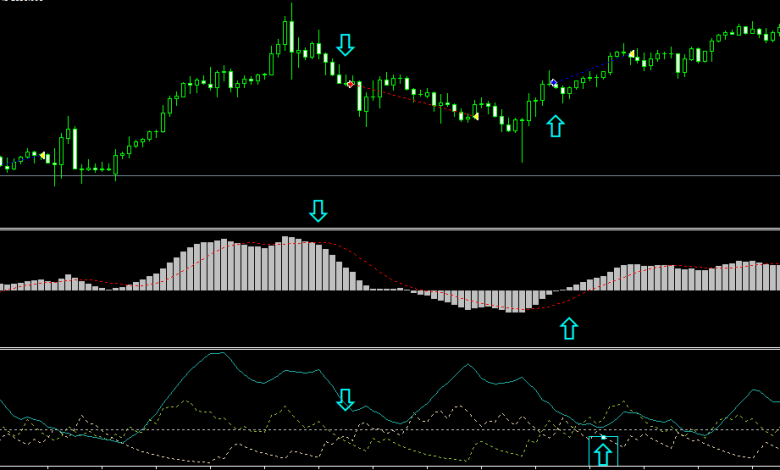
Mastering the MACD and ADX Strategy
Simple, Powerful, and Profitable Trading Techniques

Introduction to the MACD and ADX Strategy
Finding a simple yet effective trading strategy is often the first goal for anyone starting their journey in the markets. The MACD and ADX strategy is designed precisely to meet this need. By combining the power of trend identification with momentum analysis, this approach allows traders to capture high-potential market movements in the most straightforward way possible. With clear entry and exit signals, it helps you act quickly on emerging trends while minimizing confusion and indecision. What makes this strategy truly stand out is its precision—allowing even newcomers to approach the market with confidence.
Beyond its accuracy, this strategy is highly versatile and can easily be adapted into automated trading systems, making it perfect for those looking to scale their trading efforts. By focusing on strong trends and providing actionable insights, it gives you the tools to make profitable decisions without overcomplicating the process. Whether you are a beginner seeking simplicity or an experienced trader looking for a reliable edge, the MACD and ADX strategy offers a balanced and practical approach to navigating the markets effectively.
MACD and ADX Strategy Settings
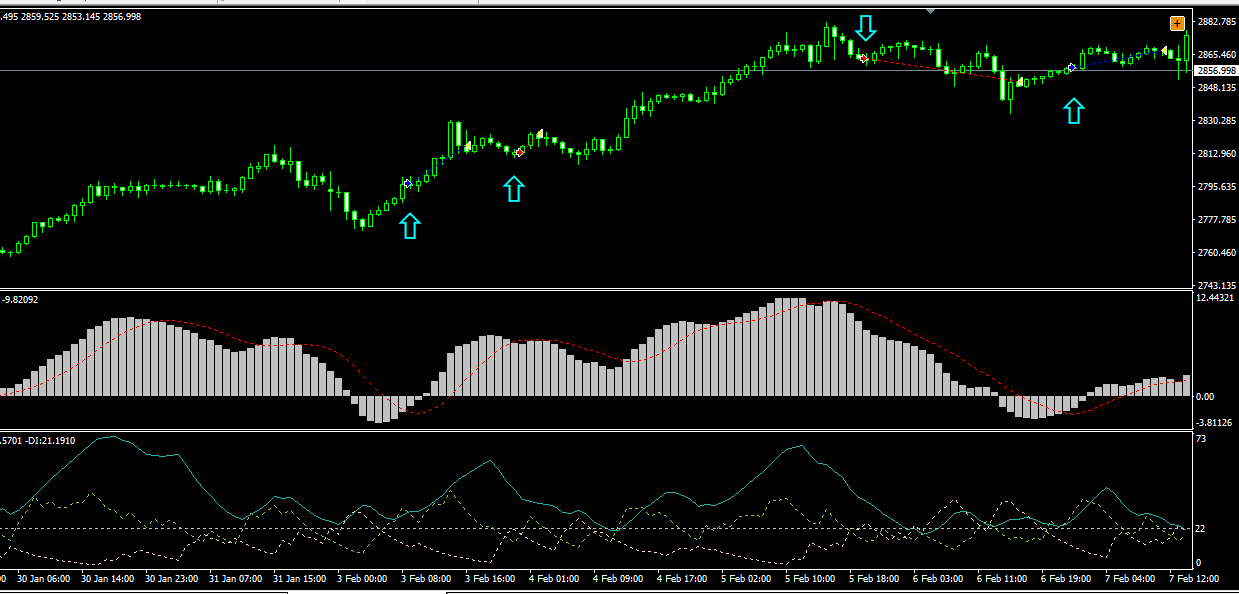
As mentioned earlier, this strategy is remarkably simple and doesn’t require complex adjustments. All you need to do is add the MACD and ADX indicators to your chart, keeping both at their default settings. The only tweak we recommend is setting a level of 22 on the ADX—this acts as a clear benchmark, signaling when a trend is gaining strong momentum. With this minimal setup, you can quickly identify powerful trends and focus on the most promising trading opportunities without getting bogged down in complicated configurations.
How to Trade with the MACD and ADX Strategy
Trading with this strategy is straightforward—just follow the rules below.
Buy Setup
-
Condition 1: The MACD must give a buy signal (the red MACD line moves away from the histogram).
-
Condition 2: +DI should be above -DI, and the ADX line must be above 22.
If the MACD gives a buy signal but +DI is below -DI, ignore the signal and wait until +DI crosses above -DI before entering a long position. Summary: Enter a buy trade only when an uptrend is confirmed and the MACD signals a purchase.
Sell Setup
-
Condition 1: The MACD must give a sell signal (for example, the red MACD line moves away from the histogram).
-
Condition 2: -DI should be above +DI, and the ADX line must be above 22.
If the MACD gives a sell signal but -DI is below +DI, wait until -DI crosses above +DI before entering a short position. Summary: Enter a sell trade only when a downtrend is confirmed and the MACD signals a sale.
Exit Strategy
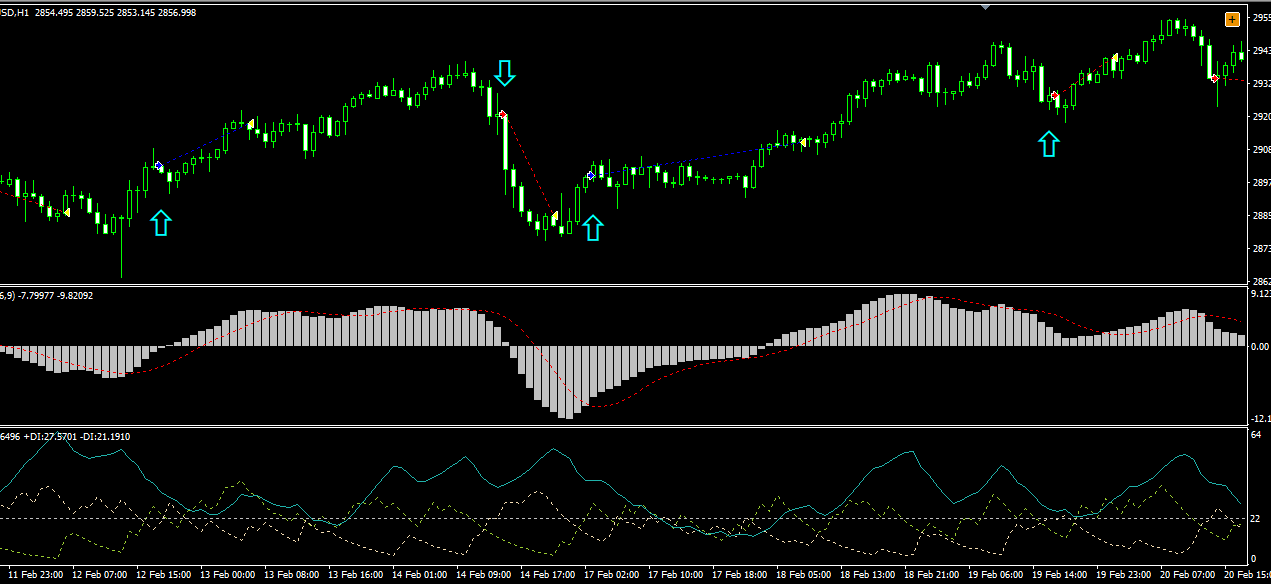
Exit the trade when the red MACD line moves back into the histogram. To protect profits, it’s recommended to use a trailing stop instead of a fixed exit point. This method allows you to ride the trend and capture the maximum potential profit from price movements.
Backtest Results of the MACD and ADX Strategy
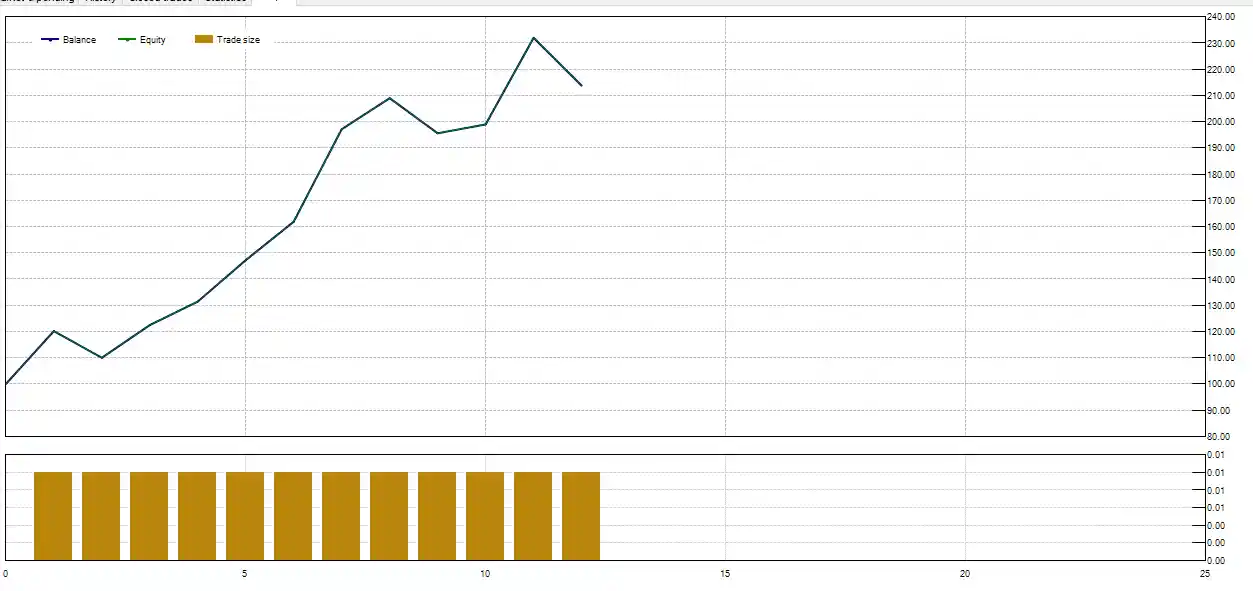
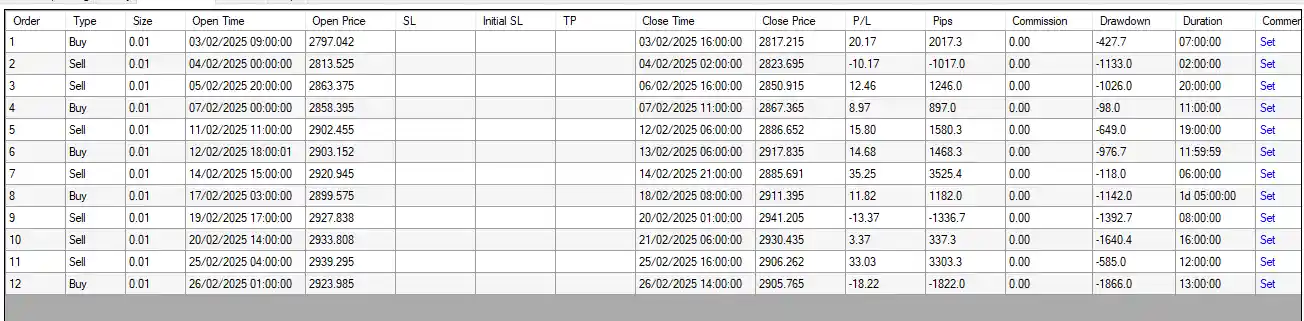
This strategy is not only simple but also remarkably powerful, as demonstrated by its backtest results. We tested it on the Gold currency pair, using a one-hour timeframe, over the period from February 1 to February 28, 2025. The findings clearly highlight the strategy’s effectiveness and reliability.
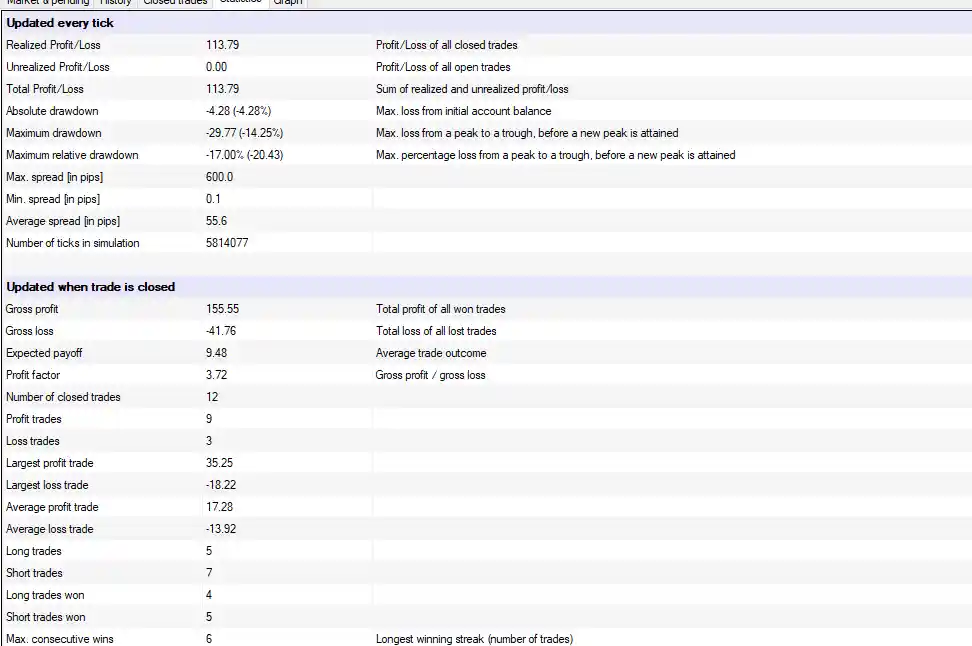
As the results show, the strategy achieved an impressive 113% profitability, which is highly desirable for traders. Its win rate reached 75%, and the risk-to-reward ratio stood at 1.3, both excellent indicators of consistent performance. Additionally, the profit factor remained at a very strong level, further confirming its efficiency. The equity curve displayed a steady upward trend, reflecting the strategy’s robustness and ability to capture market movements effectively. Taken together, these metrics demonstrate that the MACD and ADX strategy is highly suitable for traders seeking a simple yet powerful approach to the markets.
My Personal Opinion on the MACD and ADX Strategy
In my view, this strategy is both powerful and remarkably simple. It allows traders to capture portions of strong market trends while generally avoiding range-bound areas—a feature that makes it uniquely effective. What I particularly appreciate is how it filters out weak signals, helping to focus only on high-probability opportunities.
That said, like any trading approach, it’s essential to test it thoroughly and spend some time practicing in a demo environment before committing real capital. Doing so ensures you fully understand its dynamics and can maximize its potential for consistent results. Overall, I believe the MACD and ADX strategy strikes a perfect balance between simplicity and effectiveness, making it an excellent tool for both beginners and experienced traders.
Frequently Asked Questions (FAQ)
1. Is the MACD and ADX strategy suitable for beginners?
Yes, it’s simple to use and provides clear signals, making it beginner-friendly.
2. Do I need to adjust the default indicator settings?
No, just keep the default settings, but set ADX to level 22 for trend strength confirmation.
3. When should I enter a trade?
Enter only when MACD signals a buy/sell and +DI/-DI conditions align with ADX above 22.
4. How should I exit a trade?
Exit when the MACD line re-enters the histogram, preferably using a trailing stop to maximize profits.